

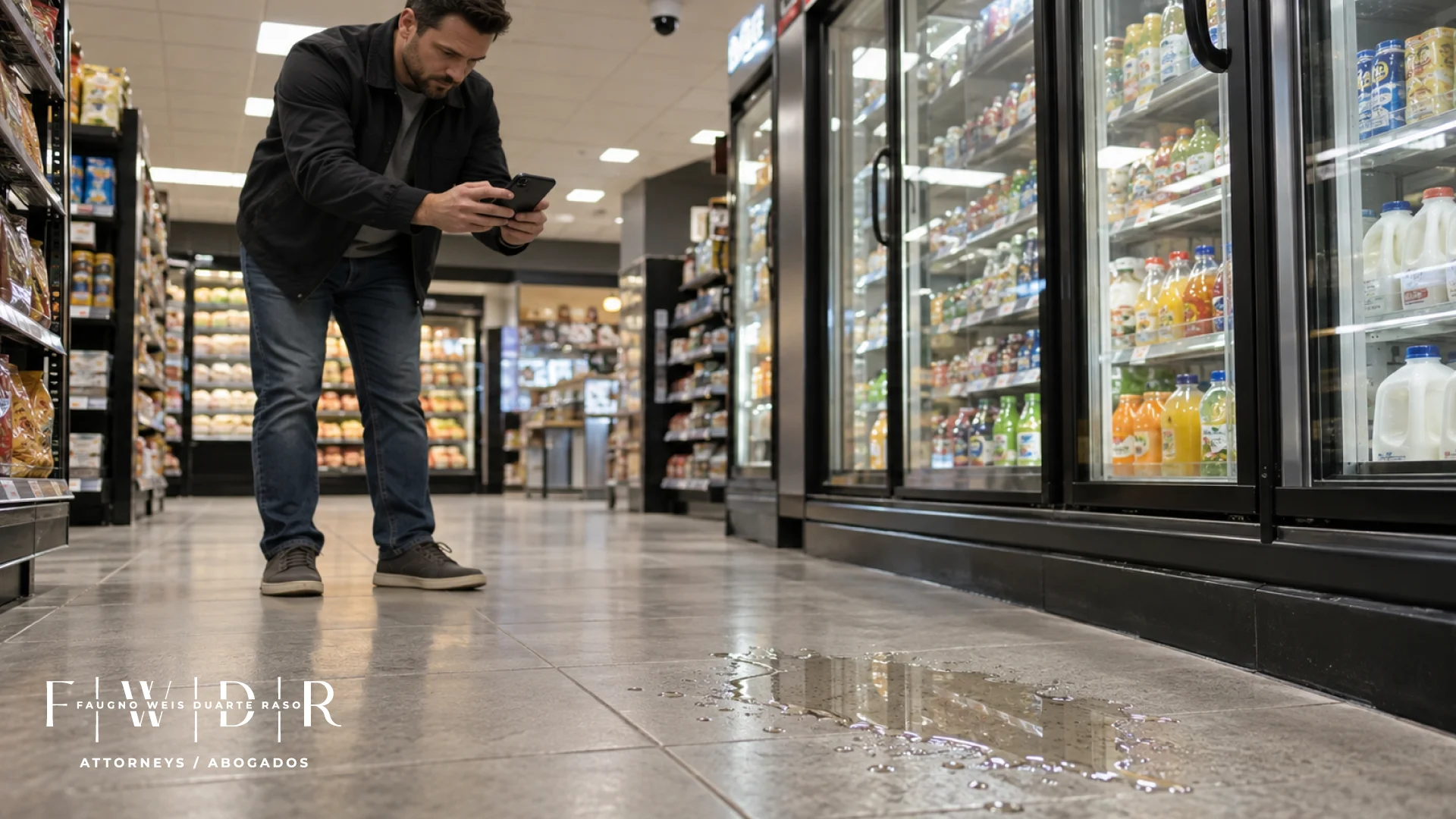
A spill may be cleaned up minutes after someone falls, leaving questions about what happened and how long the danger existed. A slip and fall lawyer looks for evidence connecting the unsafe condition, the store’s conduct, and the resulting injuries. Photographs, surveillance footage, and maintenance records can each help establish a different part of that connection.
Faugno Weis Duarte Raso, LLC handles premises liability and slip-and-fall claims, helping injured clients evaluate responsibility and their legal options in New Jersey.
What a Slip and Fall Lawyer Needs to Establish
For customers shopping in a store, New Jersey’s premises liability jury instructions describe a duty to exercise reasonable care, including reasonable inspections to discover hazardous conditions. The investigation examines whether the business met its obligations under the circumstances.
A useful starting point is identifying the specific condition involved: spilled liquid, a damaged walking surface, a loose mat, or merchandise obstructing an aisle. The evidence must also connect that condition to the fall and the injuries being claimed.
Knowing exactly where the incident occurred helps focus the investigation on the relevant cameras, employees, inspection practices, and maintenance responsibilities.
Evidence That Can Support a Store Negligence Claim
Photographs of the Hazard and Surrounding Area
Close-up photographs may document a spill, uneven surface, or obstruction. Wider photographs can show the condition’s location relative to shelving, entrances, warning signs, and the customer’s walking path.
Images taken after cleanup may provide only part of the picture. Recording when photographs were taken helps explain what they actually show.
Surveillance Footage Before the Fall
Video may capture how a hazard developed, whether employees passed through the area, and what happened immediately before the incident. Footage from before the fall can be especially relevant when the timing of a spill is disputed.
An attorney can seek preservation of relevant recordings. The appropriate time range depends on the circumstances and the questions the investigation needs to answer.
Inspection Logs, Incident Reports, and Witness Accounts
Cleaning logs and inspection records may help establish when employees last checked an aisle. An incident report can identify the location, people involved, and observations recorded afterward.
Witnesses may have seen the condition before the fall or reported it to an employee. Their firsthand observations can help fill gaps in the written records.
Medical Records and Documentation of Losses
Treatment records help document the injury and its effects. Work restrictions, missed-work records, and related expenses may also be relevant.
These records serve a different purpose from photographs of the floor: they help explain the harm associated with the incident. Both parts of the claim require attention.
How a Slip and Fall Lawyer Evaluates Store Knowledge
Many store negligence claims involve whether the business knew, or reasonably should have known, about the hazard.
Actual notice means the business had knowledge of the condition—for example, evidence that an employee received a report of the spill before the fall.
Constructive notice concerns whether the condition existed long enough that reasonable diligence should have led to its discovery and correction. Witness observations and the condition’s characteristics may help establish that timeline. The New Jersey Supreme Court’s decision in Jeter v. Sam’s Club explains this distinction.
The notice analysis can differ when the business created the dangerous condition. New Jersey also recognizes a limited “mode-of-operation” rule for certain hazards connected to self-service activities. When applicable, it removes the need to prove actual or constructive notice; it does not automatically establish liability. Simply falling in a self-service store is insufficient to invoke the rule.
Preserve a Clear Record of the Incident
After addressing immediate medical and safety needs, record the location, approximate time, and what you personally observed. Report the incident, request a copy of any report, and keep witness contact information.
Save original photographs, videos, receipts, and communications. If you do not know how long a spill was present, say so. An accurate account gives your attorney a reliable starting point for seeking additional evidence.
Review Your Store Injury Claim
Faugno Weis Duarte Raso, LLC can review the available evidence, evaluate potential responsibility, and explain the next steps after a store injury.
If you were hurt in a New Jersey slip-and-fall accident, contact Faugno Weis Duarte Raso, LLC to request a consultation.
This article provides general information and does not constitute legal advice or create an attorney-client relationship.